After the Revolution
The outcome of the war
The death toll is hard to tell precisely. There may have been around 25.000 dead mostly because of the war itself, but also because of the violence between patriots and loyalists.
Crops and harbors got severely damaged. The break with Great Britain caused a loss of opportunities for the American exportations. This young nation’s economy suffered from a huge business deficit. American production fall. It led to important indebtedness.
The revolution and war created a new country with stable republican institutions fixed by the first written constitution in history. They laid the foundations of the American political life with a two-party system, defense and economic life (dollar).
However, several points aren’t solved at the end of the 18th century: the frontiers’ evolution, the native Americans’ fate, the federal State’s place and the maintenance of slavery in the south weighed in on (= peser sur) the country’s development during the 19th century.
The United States were united by common ideals (liberty, democracy), a language (English), symbols (the bald eagle, a motto, the Star-Spangled Banner) and myths (the Founding Fathers).
In the social field, the Revolution led to better individual liberties (especially religious) and equality (primogeniture (= désigne l’antériorité de naissance et les droits qui en découlent, comme en matière de succession) was abolished, slaves became free in the North).
The American Revolution: a model?
It certainly influenced other countries. European journalists highly paid attention to what happened in America while criticizing the fate of slaves and native Americans. The Declaration of Independence was translated in the entire Europe and was a source of thinking for jurists and intellectuals.
In Great Britain, Whigs supported the Revolution and its achievements, whereas clerks and conservatives condemned it, radicals even demanded a republic in the 1790’s.
European revolutionaries claimed the American model, as in Geneva between 1781 and 1782. The sympathy of the Dutch Republic for the American cause lead to war against Great Britain in 1780 and the acknowledgement of the United States in 1782. Tadeusz Kościuszko led the Poles’ insurrection against Russian occupation after fighting in America with George Washington.
French generals who took part in the war, like the Marquis de La Fayette, brought back the American ideas with them, impacting the French Revolution. The Bill of Rights inspired the Declaration of the Rights of Man and of the Citizen. La Fayette wrote a French Bill of Rights scheme in 1788, asking for Thomas Jefferson’s advice.
However, the French Declaration went on a different path than its American sister: it was meant to be universal and more egalitarian; the Americans being stuck with the slavery issue. It ignored the right to happiness claimed by Jefferson and was less radical in the freedom of worship. Finally, the French influence replaced the American one in Europe, as it was way closer.
The American Revolution also had an impact in the British Antilles, where the republican mind spread without calling into question slavery. The Creole elite had access to the American writings like Thomas Paine’s Common Sense, and several South-American constitutions took up the United States’ one.
The American Revolution in the American culture
Numerous painters were inspired by the Revolution or the Founding Fathers, like John Trumbull. Charles Willson Peale got famous thanks to his portraits of Alexander Hamilton, John Adams, John Dickinson or even George Washington. Other well-known portraitists were James Peale, James Sharples and Gilbert Stuart.
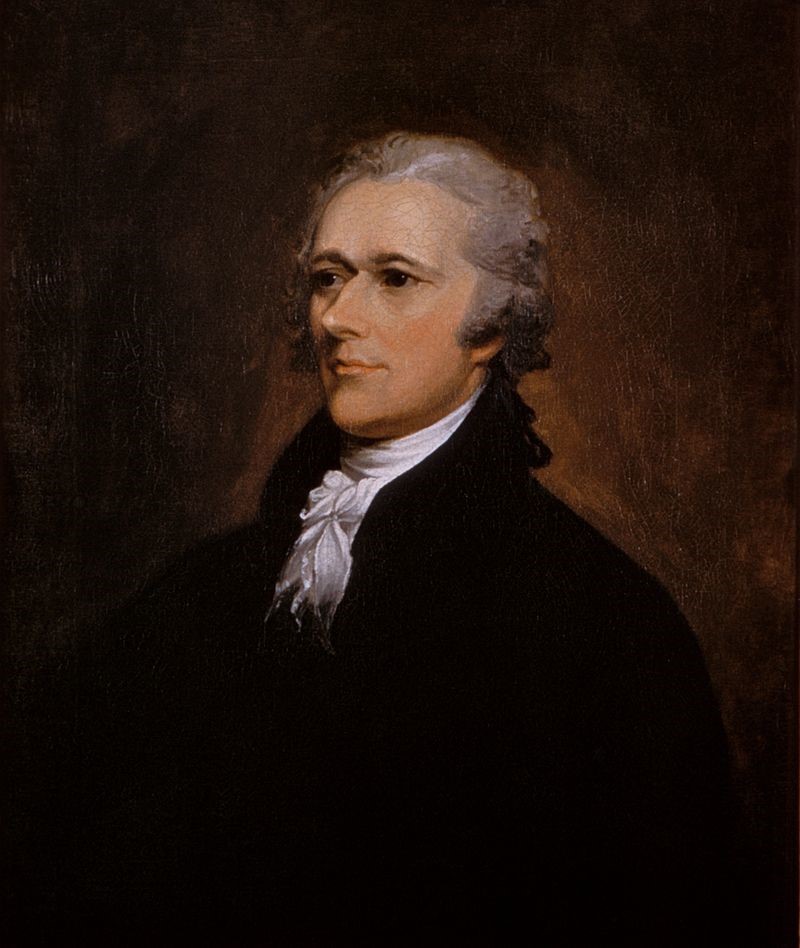
Alexander Hamilton by John Trumbull, 1805
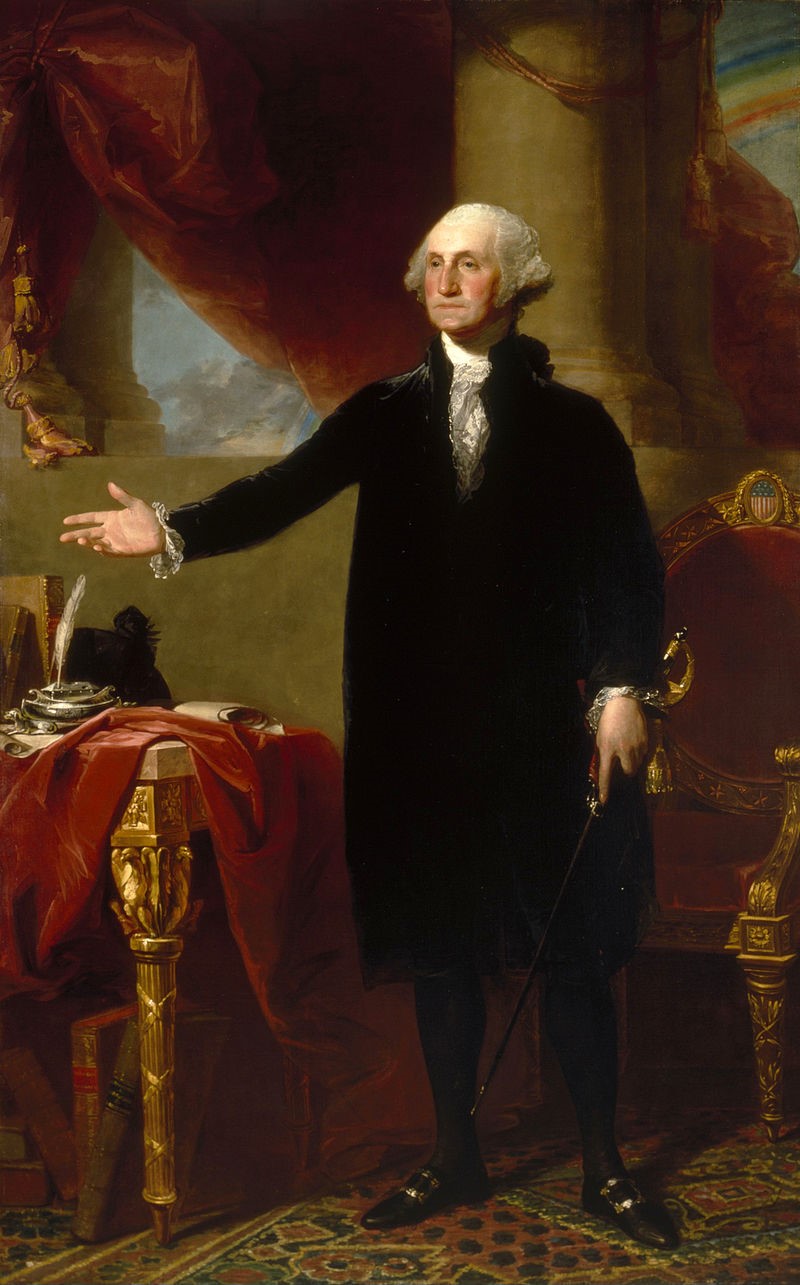
Official portrait of George Washington by Gilbert Stuart, 1796
The Revolution deeply changed arts, as Americans wanted to create their very own styles and emancipate themselves from the European ways. It influenced architecture: Jefferson wanted to create buildings that would reflect its republican and democratic ideals. This is the birth of the Federal architecture.
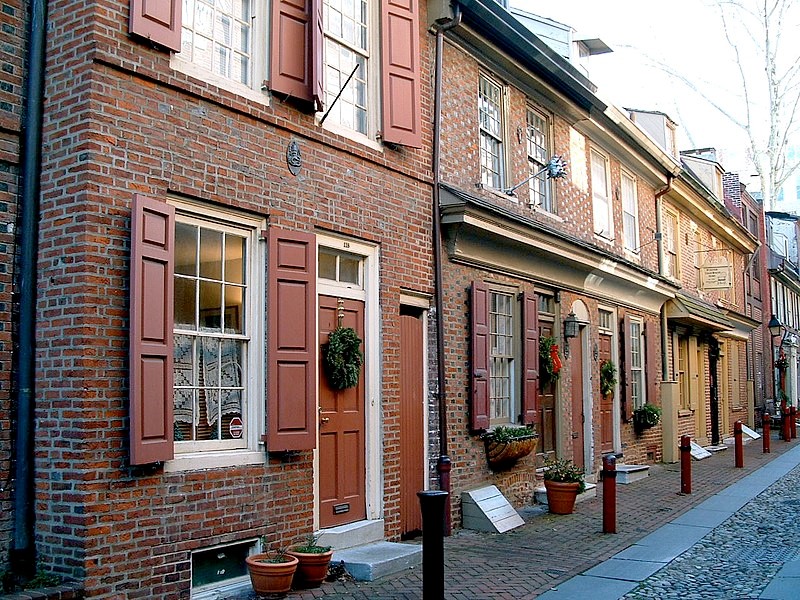
Elfreth’s Alley in Philadelphia features Federal-style homes and in referred to as “Our nation’s oldest residential street”, dating to 1702. By Busterfreak at English Wikipedia, CC BY 2.5, https://commons.wikimedia.org/w/index.php?curid=11565315
Since the debuts of cinema, several movies dealt with the War of Independence: 1776, or the Hessian Renegades, directed by D.W. Griffith in 1909 or Scouting for Washington in 1917.
Literature also tackled the subject: Paul Revere and the World He Lived In by Esther Forbes who won a history Pulitzer price in 1943; Johnny Tremain won the Newbery medal in 1944.
We can find several memorials throughout the thirteen original states, especially in Boston, New-York and Philadelphia. The Freedom Trail in Boston, the Independence Hall in Philadelphia or the Federal Hall National Memorial in New-York are important landmarks linked to the Revolution.
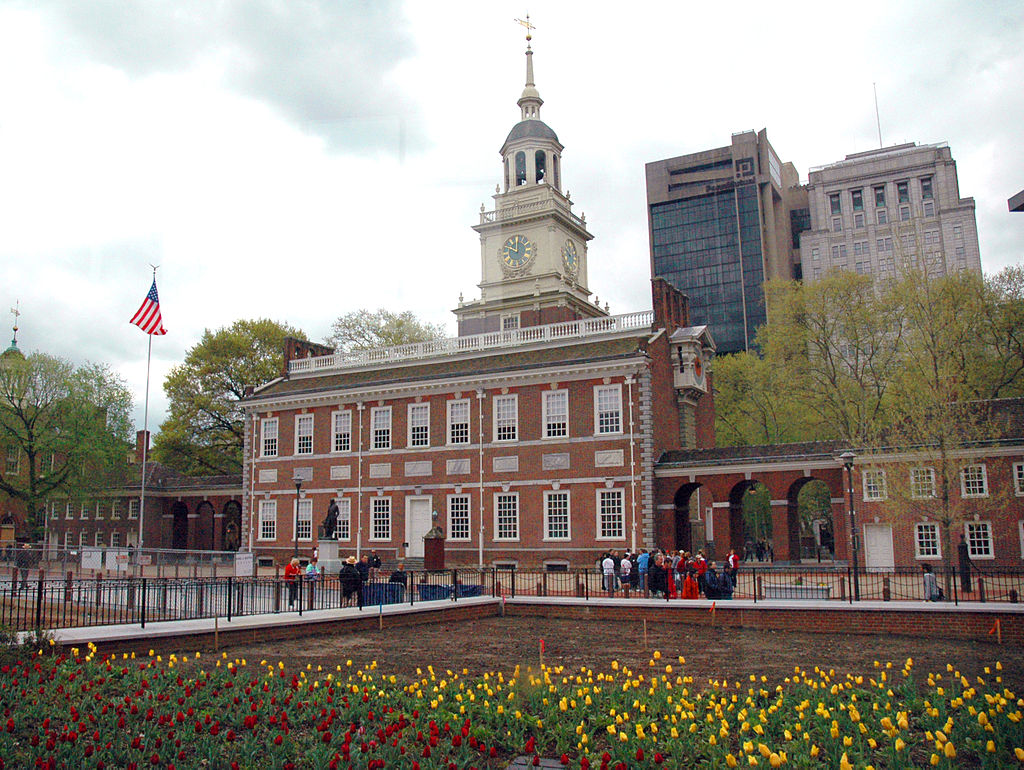
The Independence Hall in Philadelphia
One must remember that Washington D.C. was built after the Revolution. The city pays tribute to the Founding Fathers. You can find the most famous paintings of John Trumbull in the Capitol.