Context: the Thirteen British Colonies around 1775
Geography
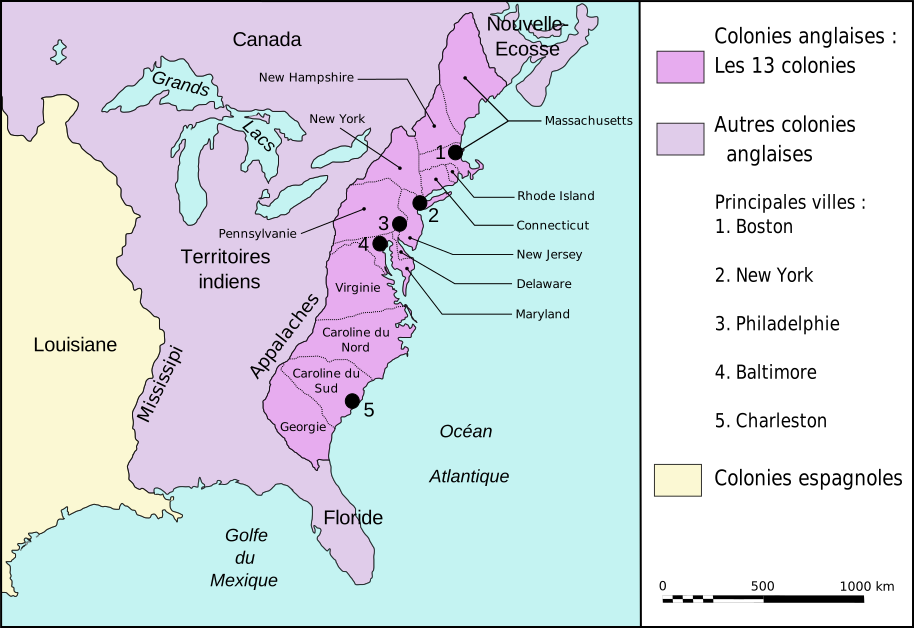
The colonies were created between early 17th century and the first third of the 18th century on hundreds of kilometers along the Atlantic coast. Communication between them was often slow and complicated: the existing roads were in a pretty bad shape and there were only few bridges.
Population
Around 1770, the Thirteen Colonies’ total population was approximately 2.2 million inhabitants. Since their creation, the colonies had a strong demographic growth thanks to immigration but also a high birth rate. Population density was quite low. For most of them, settlers lived in the countryside and the population was mostly based on the littoral where the biggest cities were, the most populated being Philadelphia (around 45.000 inhabitants), surpassing even Boston and New York.
Society
The American colonial society was really varied: next to the British majority lived Germans, Swiss, Irish, Scots, French, Dutchmen and Scandinavians. Some historians believe that this melting pot fostered the separation from Great Britain.
Religious practices were also different, elites were protestants but divided into several groups. Jews and Catholics were the first religious minorities, even though they triggered distrust.
The feudal system being absent, another hierarchy existed, based on land ownership and wealth. The elite was composed of governors, planters, shipowners and well-known traders. Then we could find a category of craftsmen, king’s representatives, farmers and small merchants. This middle class represented 40% of the total population.
Sailors, shopkeepers, bartenders and servants were at the bottom of the social ladder. The indentured servants constituted a white sub-proletariat whose living conditions were close to the slaves’ ones: they were prisoners, women and children sent by will or by force in the New World to populate it and being farmers.
As soon as the colonial era started, social disparities grew bigger and bigger. Different settlers’ groups had different interests that created tensions or even riots in cities and countryside. The elites were conscious of the issue and wanted to maintain social order and protect their properties. Others suffered more from British economic measures and land inequalities. Social tensions were inflamed by some preachers’ actions and relayed through inns (= auberges) and taverns. Newspapers also had an impact on the revolutionary feeling.
There were lots of Afro-Americans: between 1750 and 1780, they went from 236.000 to 575.000 beings. Most black people were in Southern states and enslaved. However, a minority were free and lived in the cities. Native Americans were between 100.000 and 200.000.
Government
Each colony had their own political status which depended on its history. We distinguish usually three categories:
- Royal colonies (or Crown colonies) were under the administration of the United Kingdom. Residents didn’t elect members of the British parliament. It was usually administered by a governor who directly controlled the executive and was appointed by the Crown.
- Proprietary colonies. The king offered his friends colonial charters which made their proprietor the effective ruler of the land. They became Crown colonies throughout time.
- Charter colonies were operated under a corporate charter given by the Crown. Britain granted a charter to the colonial government establishing the rules under which the colony was to be governed.
Governors applied executive power in the name of the King and had the army to their disposal. They were assisted by customs officers (= agents de douane). The governor’s council had judiciary, legislative and administrative remit (= attributions). It had an advisory purpose.
Each colony had an assembly in order to take care of local issues, but also budget and militia’s gear, with the approval of the council. It could send agents in order to present petitions and requests to London. The Massachusetts town meetings allowed the settlers to exercise a form of direct democracy. Americans had some kind of local autonomy thanks to the distance and the massive size of the colony.
Economy
The Thirteen colonies were prosperous. New-England, in the North, lived from craftsmanship, fishing and maritime trade. Boston’s merchants dealt with Antilles: they exported wood, flour, fish, whale oil and imported sugar, molasses (= mélasses) and tafia.
Trade encouraged textile and metal industry. It also eased the creation of shipyards (= chantiers navals) and distilleries.
In central colonies, farming was diversified and breeding was everywhere.
Southern colonies lived from tobacco, cereals and indigo exportation thanks to a humid subtropical climate. Planters had slaves working in huge plantations. White aristocracy lived on their estates (= domaines) and had quite pretty residences. However, the plantation system wasn’t quite the one that lasted until the Civil War, it was brought by French landowners fleeing from slaves’ riots in 1798. South was mostly rural and not so populated.
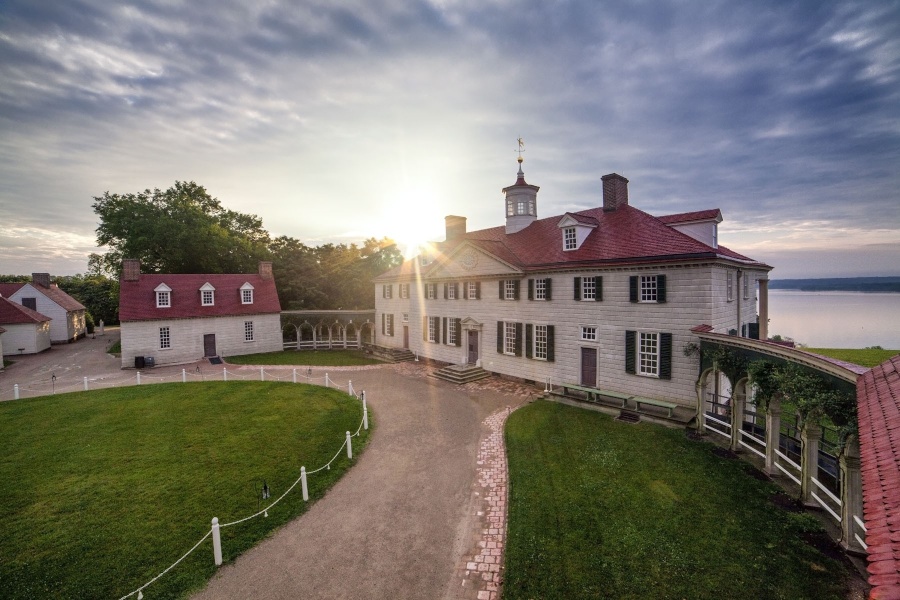
George Washington’s estate, Mount Vernon, in Virginia