The figures of the American Revolution
The Founding Fathers
“Founding Fathers” designate the men thanks to whom the American Constitution was born. They are seen as heroes. Those about sixty men shared numerous common points: all white, a majority being Christian. They read the Lumières’ philosophers and some were freemasons (= franc-maçons). They are experienced and intelligent men, mostly jurists or notables. Lots of them served in the continental army to high commanding positions.
The most famous had political positions, first in their own States, then higher: George Washington, John Adams, Thomas Jefferson and James Madison where the first four POTUS. Others were known for their speaking skills like Patrick Henry, their diplomatic actions like John Jay or Benjamin Franklin, or even their written work like Thomas Paine or John Dickinson.
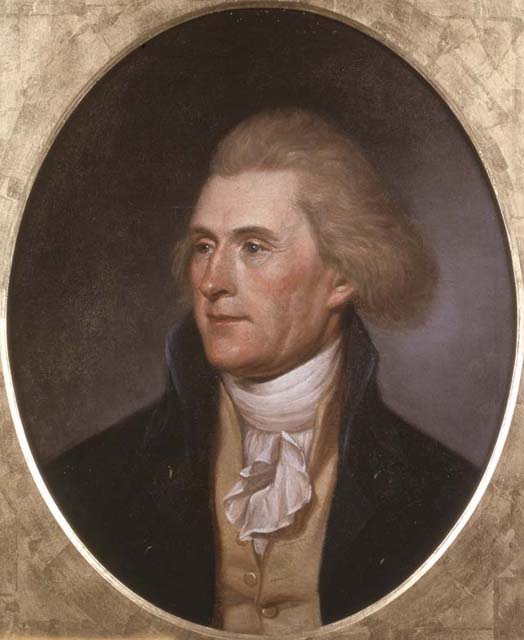
Thomas Jefferson by Charles Willson Peale, 1791
Loyalists
Not all of the Thirteen Colonies inhabitants were insurgents: during years 1760-1770, lots of settlers adopted a wait-and-see attitude (= attitude attentiste), where others were clearly loyalists, i.e. against the Revolution. According to historian Walter Stewart, loyalists represented 19% of the population. For other specialists, around 30% were loyalists, i.e. 900.000 people. According to Bernard Vincent, ⅖ of Americans were passive, ⅖ were patriots and ⅕ were loyalists.
They were numerous in New-York, Philadelphia and both Carolinas: loyalists were often former British soldiers, Anglican clerks, traders. 30.000 to 40.000 loyalists fled to Canada, their goods were confiscated.
During the First Continental Progress (1774), Joseph Galloway wanted to reconcile the colonies and the mainland (Galloway’s Plan of Union). He was followed by other conservatives and loyalists. In the middle of this were moderated delegates, like merchants and bourgeois in favor of the conservation of business relationships with Great Britain.
Women
They participated in various ways to the Revolution: in the 1770’s, they boycotted British merchandises and sewed their own clothes in order to avoid wearing British clothing. They organized demonstrations like the Edenton Tea Party in 1774 and took part in the Boston riots. During the conflict, they made blankets and uniforms for the army. Some organizations, like the Ladies’ Association in Philadelphia, collected funds to help the troops. Others followed the continental army and served soldiers by doing the laundry, cooking and healing the wounded, or even by spying or fighting.
Some women like Deborah Simpson dressed up as men to go on the battlefield. Others had an important role in the intelligence (= renseignement) by passing messages to soldiers. The officers’ wives frequently visited the troops, like Martha Washington.
But women were also victims of the war by being confronted to such violence. They lived in fear of rape and had sometimes to defend their home alone.
Lots of them became widows. Loyalist women had, for the majority of them, to follow their husbands to Canada or the British Antilles. Others chose resistance by refusing to swear (= prêter serment) to the new government or by hiding their husbands and savings.
The political role of women was limited: however, Abigail Adams or Mercy Otis Warren, a political writer and propagandist of the Revolution, had some influence.
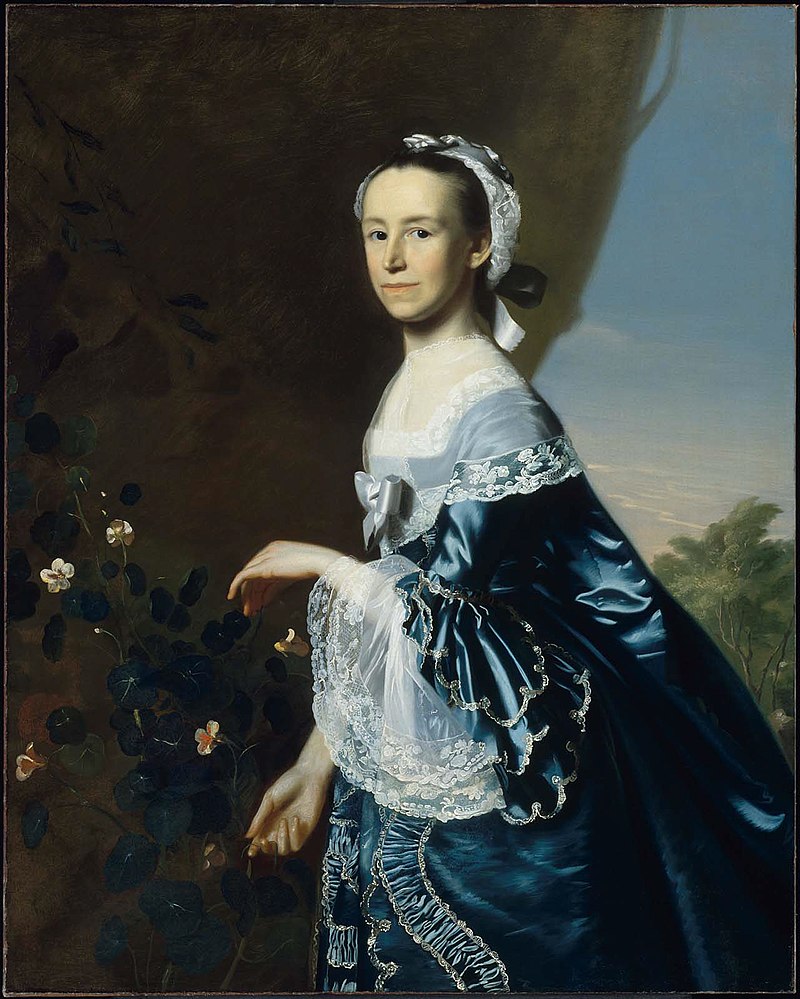
Mercy Otis Warren by John Singleton Copley, 1763
After the Revolution, women were instrumentalized to teach republican values to their children.
Afro-Americans
Afro-Americans also participated to the revolution on various scales.
Lots of black people took part in the fight next to the British. In April 1775, Lord Dunmore, governor of Virginia, offered liberty to the blacks who would fight against the patriots and abandon their masters. He even created the “Ethiopian Regiment”, counting around 500 former slaves. In June 1776, British general Henry Clinton did the same in Phillipsburg. In 1779, around 10.000 Afro-Americans had joined the British troops. Thousands of those black loyalists were listed in the Book of Negroes, evacuated in London or New-Scotland and then installed in Freetown, Sierra Leone.
5.000 blacks fought with the insurgents and numerous of them were freed. However, commander George Washington forbid their presence in the continental army at first: after Lord Dunmore’s decision, Washington came back on his decision and authorized military engagement first for the free blacks, then for the slaves. Georgia lost ⅓ of its salves at that time.
Lots of slaves also took advantage of the conflict to run away.
Black people obtained some emancipation in central states (Philadelphia) and in New-England where they were few. Slavery was abolished in 1777 in Vermont, in 1780 in Pennsylvania, in 1783 in Massachusetts. However, the American Declaration of Independence did not abolish slavery and the Constitution did not implement civic equality, in order not to discontent the Southern States.
Thousands migrated to the North to be free, or to the West to be farmers. Loyalists fled with their slaves.
Native Americans
As for the blacks, native Americans took part in the war, either on the British side or on the American side. For instance, the Lenape, also known as the Delaware people, signed a treaty with the Americans in 1778 supposed to offer them an autonomous territory in exchange of their help. The Catawba people also helped the insurgents by providing food.
Other tribes were on the British side by fear of colonization and harassed the American troops. The six Iroquois nations’ delegates, wanting neutrality in the beginning, finally supported the British. They declared their own Declaration of Independence.
At the end of the Revolution, the native Americans’ situation didn’t improve: numerous villages were destroyed and crops were ransacked. The Treaty of Paris (1783), ignored their presence and allowed the American colonization west of the Appalachian Mountains. The American Constitution banned them from citizenship. The American expansion to the west led to conflicts with native Americans, some tribes even creating confederations.